
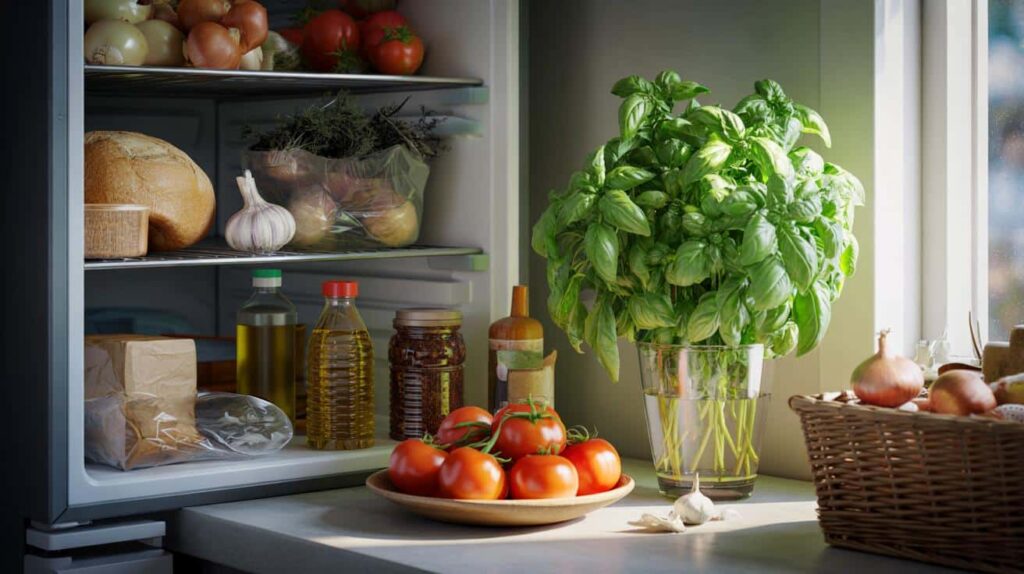
You’re standing there in your socks, vaguely hungry, staring at a crowded middle shelf. Lemons, onions in a plastic bag, a sad bunch of basil, tomatoes shivering next to the milk. Everything looks “safe”, neatly chilled, quietly ageing before its time.
We grew up with the same mantra: when in doubt, stick it in the fridge. Food safety first, right? That’s how herbs go limp overnight, bread turns to cotton wool, and your once-mighty tomatoes lose all their summer swagger. The fridge protects some foods brilliantly. Others, it quietly ruins.
The twist is, many of the things people stash in the cold are actually tastier, longer-lasting and cheaper to keep at room temperature. Your kitchen habits might be making food dull, not fresh. And it starts with nine very common culprits.
1. Tomatoes, basil and other “sun lovers”
Tomatoes look so obedient lined up in the fridge door, but they’re sulking. These are warm-climate fruits, wired to ripen under sun, not under an LED bulb at 4°C. The cold shuts down the enzymes that build their flavour. You don’t just “slow ageing”, you pause their personality.
Basil behaves the same way. One night in the fridge and it comes out blackened at the edges, smelling faintly of “salad that’s had a rough day”. The leaves absorb fridge moisture, the cells burst, and the aroma evaporates. You end up binning half a pot and quietly wondering why fresh herbs feel so high-maintenance.
In one UK survey on food waste, fresh veg and herbs were among the top items people throw away each week, often because they “went off in the fridge”. A London chef I spoke to laughed and said he could spot a refrigerated tomato blindfolded: it’s mealy, slightly watery, and the smell dies first. Home cooks get used to that as “normal”, then blame the supermarket instead of the fridge climate.
There’s also a money angle. When a tomato’s texture collapses in the cold, you’re less likely to slice it onto a sandwich or salad. It lingers, then lands in the bin. That slow drip of waste builds over months into real cash, especially with rising food prices. The odd thing is: moving a bowl from shelf to worktop could quietly fix the problem.
Keep tomatoes at room temperature, stem-side down, in a shallow bowl. Let them breathe. If they’re very ripe and you truly need to stretch them one extra day, chill briefly, then bring them back to room temp before eating. Basil likes a different treatment: trim the stems and stand them in a glass of water like flowers, loosely cover with a reused produce bag and leave on the counter. Change the water every couple of days and you’ll get a small forest instead of a mushy puddle.
Many people feel guilty when herbs wilt. The fridge seems like the “sensible” choice, so when it goes wrong you blame your timing or your planning. The truth is, the cold air is simply the wrong habitat. Tomatoes stacked next to milk and leftover curry pick up odours too, which flattens their flavour further. When you bring them back to room temperature, you’re not just warming them up; you’re giving their aroma a chance to wake up again.
Scientifically, the issue is chilling injury. Below about 10°C, tomato cell membranes get damaged, which is why the flesh turns grainy. The same cold stress hits basil and other tender herbs. Their aromatic compounds are volatile, meaning they literally float off into the fridge air faster. *Your nose notices before your eyes do.* Once you link that faint “fridge smell” on a tomato to what’s actually happening, it’s hard to unsee it.
2. Onions, garlic, bread and coffee: everyday staples we quietly mistreat
Whole onions and garlic don’t belong in the fridge. Tucked into the vegetable drawer in their little mesh bags, they sit in damp, chilly air that nudges them to sprout, go mouldy or turn soft. These bulbs evolved to sit in cool, dry earth, not a condensation-heavy corner next to salad leaves.
Bread and coffee suffer a different kind of quiet sabotage. Bread in the fridge goes from fluffy to stale at top speed because its starches crystallise faster in the cold. Coffee beans or grounds absorb odours like a sponge and lose the oils that carry flavour. You come back to a brew that tastes flat and vaguely “fridge-ish”, then wonder if you bought the wrong brand again.

On a recent visit, my friend Claire opened her fridge and laughed when I pointed at the garlic next to the yoghurt. “Where else do you put it?” she shrugged. A week later she messaged a photo of the same garlic, now sprouting bright green shoots, and a half-loaf of focaccia gone rock-hard on the top shelf. Those little moments are everywhere in British kitchens: good food unintentionally pushed towards the bin by well-meant habits.
WRAP, the UK waste charity, estimates that households bin millions of slices of bread every day. A chunk of that is down to “keeping it fresh in the fridge”, which actually speeds up staling. Add the bags of forgotten onions turning to mush at the back of the crisper and the jar of coffee that somehow never tastes like the café version, and you’ve got a quiet pattern of disappointment.
What’s going on is mostly chemistry and moisture. Onions and garlic stored cold in humid air start to break dormancy, so they sprout and rot faster. Bread’s starch structure reorders in the cold, throwing out moisture and turning the crumb dry and chewy. Coffee is a bundle of delicate aromatics; every time it goes in and out of the fridge, condensation forms on the beans, dragging flavour out and pulling stray odours in. None of this shows on the label in the supermarket. You only notice the end result in your sandwich, your toast, your morning cup.
3. Fruit, condiments and oils: the cold war on flavour
Bananas, whole melons, avocados, soy sauce, hot sauce, honey and olive oil often end up in the fridge by sheer reflex. You get home, unload the bags, and anything that isn’t a tin gets a cold shelf. The result? Bananas with greyish, spotty skin and a weird texture, rock-hard honey, cloudy oil and condiments that never quite taste as bright as they should.
Some of these foods are almost bulletproof. Honey, for instance, is naturally antimicrobial and keeps ages in a cool cupboard. Soy sauce and many hot sauces are already preserved with salt, acid or fermentation. Sticking them in the fridge doesn’t really extend their life in a meaningful way; it just dulls the flavours you paid for. Your fridge door quietly becomes a graveyard of half-used bottles.
We’ve all had that moment where you squeeze honey over yoghurt and nothing comes out, because it’s crystallised into a sugary brick. Or you try to drizzle olive oil and it pours in cloudy lumps. Friends swap tips in group chats about “how to rescue honey from the fridge”, as if it were a complete mystery and not just a temperature problem. These micro-frustrations aren’t dramatic, they’re just constant.

What’s happening is that cold encourages certain sugars and fats to solidify. Honey naturally crystallises over time, but that process speeds up in low temperatures. Olive oil contains different fatty acids that cloud and thicken in the fridge, then take ages to become liquid again. With fruit, refrigeration changes ripening: bananas get chill-damaged, so their skin darkens while the flavour can taste oddly muted. Whole melons and unripe avocados ripen better at room temperature; the fridge can suspend them awkwardly between hard and bland.
Store bananas on the counter, ideally on a hanger so they don’t bruise. Keep whole melons and unripe avocados out too; move cut melon or ripe, cut avocado into the fridge briefly, tightly wrapped, and eat promptly. Honey and oils belong in a cool, dark cupboard away from the hob. Strong condiments like soy sauce and most hot sauces are happy in a pantry; read the label for the few that genuinely need chilling once opened, but don’t default to cold just to “be safe”.
People often say they feel nervous leaving things out. Food safety messaging over the years has leaned hard on refrigeration, and for good reason with meat and dairy. That mindset then spreads to everything, even shelf-stable items. *Soyons honnêtes : personne ne lit vraiment chaque étiquette avec attention tous les jours.* So the easy answer is “just fridge it all and hope for the best”. That instinct makes sense emotionally, even if it quietly works against the flavours you want.
“The fridge is brilliant for stopping bacteria,” says a UK food scientist I spoke to, “but it’s terrible for some textures and aromas. The trick is knowing which battle you’re actually fighting: safety, or quality.”
- Room-temperature heroes: Tomatoes, bananas, onions, garlic, whole melons, honey, many condiments.
- Fridge essentials: Meat, fish, dairy, cut fruit, leftovers, leafy greens.
- “It depends” items: Avocados, bread (counter vs freezer), some sauces with fresh ingredients.
How to actually change your fridge habits without driving yourself mad
The easiest way to reset is to rearrange your kitchen once, on a quiet evening. Pull out the obvious non-fridge items: whole onions, garlic, tomatoes, bananas, coffee, honey, oils, sturdy condiments. Create a simple “dry zone” in a cupboard or on a shelf: one basket for alliums (onions, garlic, shallots), one spot for fruit that prefers room temperature, one tray for oils and sauces.
Then give each thing a simple rule in your head. Tomatoes: counter. Bread: bread bin or wrapped on the counter, or sliced and frozen, never chilled. Coffee: airtight tin in a dark cupboard. Honey and olive oil: away from heat and light. You don’t need a printable chart on the fridge; you just need a few anchor habits that feel obvious after a week or two. The fridge becomes the place for food that genuinely needs cold, not a storage unit for your unease.

You might slip. You’ll chuck a net of onions into the crisper on a rushed Sunday shop. You’ll wake up one day and realise the basil spent the night next to the yoghurt again. That’s fine. This isn’t about perfection. The goal is to reduce how often you accidentally ruin flavour or bin food you paid good money for.
One practical tip that helps: keep the fridge less than crammed. When there’s space, you can actually see the things that must stay cold, and you’re less tempted to cram in everything by default. Use your freezer as a friend for bread and leftovers that might otherwise linger. And if a food does come out of the fridge dull or damaged, treat that as a tiny nudge to rethink where it lives next time, not a reason to feel bad.
Over time, something subtle shifts. Your tomatoes taste like tomatoes again. Bread stays soft long enough to eat. Your coffee actually smells like the packet promised. You start trusting your senses – sight, smell, touch – rather than outsourcing every decision to cold air. On a busy weekday evening, that little bit of confidence makes cooking feel less like a chore and more like a small act of looking after yourself.
On a deeper level, this is about the stories we’ve been sold about “freshness” and “safety”. A giant humming box in the corner of the kitchen became a symbol of being modern and responsible. The side effect is that we sometimes ignore what our grandparents knew by instinct: some foods want cool darkness, not chill; some want gentle air, not plastic; some taste better when they’re allowed to breathe. Once you start noticing which is which, the weekly shop looks different.
So what goes where, really?
When you open your fridge tonight, you might see some familiar faces shivering on the wrong shelf. Instead of feeling overwhelmed, treat it like a quiet game: which of these could live better elsewhere? Move the honey. Evict the onions. Rescue the tomatoes.
You’ll probably notice other habits too, beyond this list of nine. Citrus piling up in the cold when a simple fruit bowl would do. Rock-solid butter when you’d rather spread it without tearing the toast. A basil plant on life support that could have been a week of bright, peppery flavour with the right treatment.
The way we store food shapes how we eat, what we waste and what actually brings us pleasure at the table. These little shifts – a basket here, a glass of water for herbs there, a braver attitude to leaving condiments out – can change your kitchen more than a new gadget ever will. You might even find yourself telling friends about the “no-fridge tomatoes” and passing the habit on, the way kitchen wisdom has always travelled: one conversation, one shared meal, one slightly smug slice of toast at a time.
| Point clé | Détail | Intérêt pour le lecteur |
|---|---|---|
| Sortir certains aliments du frigo | Tomates, oignons, ail, bananes, miel, huiles et plusieurs condiments préfèrent la température ambiante | Moins de gaspillage et des saveurs plus intenses au quotidien |
| Mieux utiliser le froid | Garder le frigo pour la viande, le poisson, les produits laitiers, les restes et les fruits déjà coupés | Plus de sécurité alimentaire sans sacrifier le goût des autres produits |
| Créer des “zones” de rangement | Un coin sec pour les alliums, un panier pour les fruits, un placard sombre pour café, huile et miel | Une cuisine plus claire, plus fluide, où chaque aliment a sa place naturelle |
FAQ :
- Do tomatoes ever belong in the fridge?Only as a last resort when they’re very ripe and you need to stretch them by a day. Bring them back to room temperature before eating so the flavour can recover slightly.
- What’s the best way to keep bread fresh without refrigerating?Store it in a bread bin or wrapped in a clean cloth or paper at room temperature, and freeze slices you won’t eat within a couple of days.
- My honey has crystallised. Is it gone off?No, crystallisation is natural. Gently warm the jar in a bowl of hot (not boiling) water and it will return to a smooth texture.
- Should coffee ever go in the fridge or freezer?The fridge is a bad idea because of moisture and odours. The freezer can work for long-term storage if beans are in an airtight container and you only thaw what you’ll use soon.
- Are there condiments that really must be refrigerated?Yes: those with fresh ingredients like mayonnaise, some pestos and sauces containing dairy or fresh herbs usually need chilling once opened. Check the label – when it says “refrigerate after opening”, that one goes in the fridge.