
By the time the chicken bones had given up their last bit of flavour, the pot was full and your energy was gone. You strain it, taste it, feel a small glow of pride… then stare at nearly two litres of golden liquid wondering, “What on earth do I do with all this?”
You pour some into a jar. Another bit into a takeaway container. You tell yourself you’ll remember it’s in the back of the fridge. A week later you’re tipping it into the sink, annoyed at yourself and slightly guilty.
There is another way. And it starts with a muffin tray.
Why muffin-tray broth cubes quietly change everything
The first time you pour leftover broth into a muffin tray, it feels slightly ridiculous. Like you’re playing kitchen Tetris instead of cooking dinner. Then, a few days later, you’re standing over a pan, about to cook risotto, and it hits you: those broth “muffins” are frozen solid, ready and waiting.
You pop out three or four, they hit the hot pan with a soft hiss, and suddenly you’re cooking like the version of yourself you wish turned up every weeknight. No stock cube wrapper, no flavourless liquid from a carton, just your own broth, frozen in neat, grab-and-go portions.

That’s the quiet magic of this trick. It doesn’t ask you to be a different person. It simply turns the effort you already made into something that keeps paying you back, one cube at a time.
Think of it as meal prep for people who hate meal prep. One Sunday, you roast a chicken, boil the bones, and make “real” broth almost by accident. *You’ve already done the hard part.*
Now imagine having that same broth show up again on a Wednesday night, hidden in a tomato sauce that suddenly tastes like it came from an Italian grandmother’s kitchen. Or in a quick noodle bowl that feels vaguely like healthcare in a mug.
One muffin cup equals roughly half a cup of liquid, which means two or three “muffins” are enough to deepen a stew, fix a bland soup, or give life to a pan sauce. Instead of a bulky tub you forget, you get small, practical building blocks of flavour. And quietly, your cooking stops being random and starts being layered.
Home cooks waste a shocking amount of broth. Not because we don’t care, but because we’re tired. A UK kitchen survey once found that liquid foods like soups and stocks are among the top things we bin, simply because they hide in the fridge until it’s too late.

On a typical week, someone makes a big pot of soup “for lunches”, keeps it in one massive container, and then never quite feels like ladling it out, heating it up, washing the pan. By Friday, it’s growing a soft, accusing film on top. Into the bin it goes.
Freezing in muffin trays breaks that pattern. Suddenly broth is not “a big project to deal with”. It’s six or twelve small options, frozen in a way that matches real life: irregular, last‑minute, slightly chaotic cooking. And that’s where this humble tray earns its place on the kitchen shelf.
How to freeze leftover broth in muffin trays without faff
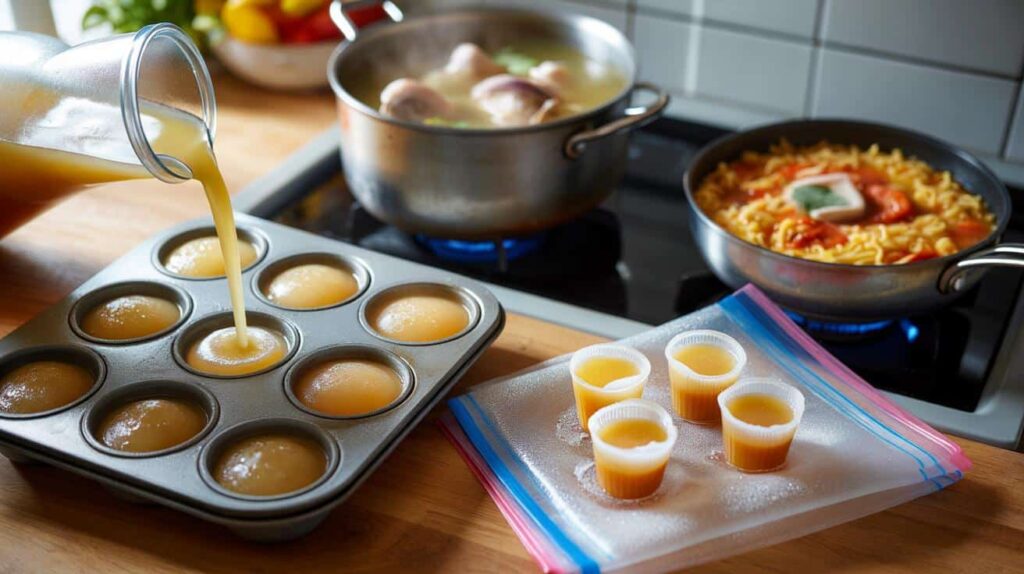
Start with broth that’s cooled to room temperature. Warm liquid in a cold freezer turns to frost and weird ice crystals, and nobody wants that. Grab a clean muffin tray – metal for speed, silicone for easy release – and give each cup a quick wipe with a tiny bit of neutral oil if you’re worried about sticking.
Pour the broth into the cups, leaving a small gap at the top for expansion. You don’t need to be precious about it; roughly the same level in each cup is good enough. Slide the tray onto a flat shelf in the freezer where it can sit undisturbed for at least three to four hours, or overnight if you’re the “deal with it tomorrow” type.
When the broth is frozen solid, twist the tray gently or press from underneath to pop out the broth “muffins”. Drop them into a labelled freezer bag or lidded container, push out as much air as you can, and tuck them into a corner of the freezer like gold coins you forgot you owned.

This is where most people trip up: they freeze beautifully, then forget what the cubes are. Or what’s in them. Or when they made them. That’s not a moral failing; that’s just how brains work at 7pm after work.
Use a marker to label the bag with three things: “Chicken broth”, “Jan 2025”, and roughly how many cubes equal a cup. Future you will silently thank past you. Separate flavours too. Keep your fish stock a safe distance from your delicate vegetable broth, unless you like surprises.
Soyons honnêtes : personne ne fait vraiment ça tous les jours. You’ll skip it sometimes, you’ll leave a pot of broth in the fridge and regret it. That’s normal. But the weeks where you do get the tray out, the benefit multiplies every time you cook.
“I stopped seeing myself as someone who ‘fails at meal prep’,” laughs one busy dad from Birmingham. “Now I just think: if I’ve got broth cubes in the freezer, I’m never more than 10 minutes away from real food.”
To keep things simple, treat this as a small ritual rather than a big system. Once the cubes are frozen and bagged, slide the tray back into its usual job for cupcakes or Yorkshire puddings. No special gear, no “perfect pantry” fantasy.

- Standard muffin cup ≈ 120 ml – great for soups, stews, big sauces.
- Mini muffin cup ≈ 30–40 ml – ideal for pan sauces and stir‑fries.
- Label by type and date – chicken, beef, veg, fish, ramen, etc.
- Freeze flat first, then bag – stops leaks, saves space, keeps shapes neat.
- Use within 3–4 months – for best flavour and no freezer‑burn tang.
Letting broth cubes quietly upgrade everyday cooking
The real joy of broth “muffins” isn’t the freezing. It’s what they let you do on an ordinary, slightly grim evening when you’re tempted to order takeaway. One cube dropped into a pan of tinned tomatoes and onions, and suddenly you’ve got a pasta sauce that tastes slow-cooked.
A couple of cubes melted into leftover rice with some frozen peas, and you’ve made a five‑minute fake pilaf that feels like an actual meal. Swirl a cube into boiling water with miso paste, leftover greens and noodles, and you’ve built a bowl that feels like a quiet reset after a long day.
On a cold Sunday, toss some random fridge vegetables in oil, roast them hard, then blitz with a few thawed broth muffins. Call it soup. Call it “using things up”. Call it not throwing money in the bin. On a deeper level, this tiny habit is a form of respect: for the animal bones you used, the vegetables you chopped, the time you already spent. On a lighter level, it’s just fun.
We’ve all had that moment where we open the fridge, see leftovers, and feel faintly defeated. Broth cubes interrupt that story. Instead of a single, large, slowly dying tub, they give you choices.
Maybe today that choice is an omelette enriched with a splash of thawed broth in the eggs. Tomorrow, it’s grains cooked in broth cubes and water rather than plain water, for a side dish that doesn’t taste like cardboard. Next week, it’s a pan sauce for roasted veg: a cube, a knob of butter, a spoon of mustard, done.
This small, un‑flashy trick can even change how you see your freezer. Less like a graveyard of lost food, more like a library of edible ideas. Each tidy little puck holds a memory of a meal you cooked, ready to carry its flavour into the next one.
| Point clé | Détail | Intérêt pour le lecteur |
|---|---|---|
| Portions gérables | Un muffin ≈ 1/2 cup de bouillon, facile à doser | Facilite la cuisine rapide sans gaspiller un gros contenant |
| Moins de gaspillage | Le bouillon est congelé dès qu’il est prêt | Économie d’argent, moins de culpabilité et un frigo plus net |
| Goût boosté | Bouillon maison toujours disponible en cubes | Transforme des plats ordinaires en repas plus profonds et réconfortants |
FAQ :
- Can I freeze any kind of broth in muffin trays?Yes. Chicken, beef, vegetable, fish, even ramen-style broths freeze well, as long as they’re cooled first and strained of large solids.
- Do I need to skim the fat off before freezing?Not strictly, but removing most of the fat gives cleaner cubes and a fresher taste; you can always add butter or oil when cooking.
- How long do broth muffins last in the freezer?They’re safe for many months, yet best flavour is within 3–4 months before freezer smells begin to creep in.
- Can I thaw broth cubes in the microwave?Yes. Put them in a microwave‑safe jug or bowl, cover loosely, and heat in short bursts, stirring between each until melted.
- What if my cubes stick to the muffin tray?Let the tray sit on the counter for a minute, then twist gently or dip the bottom briefly in warm water to release them more easily.